Urine test may improve bladder cancer diagnosis and guide treatment decisions
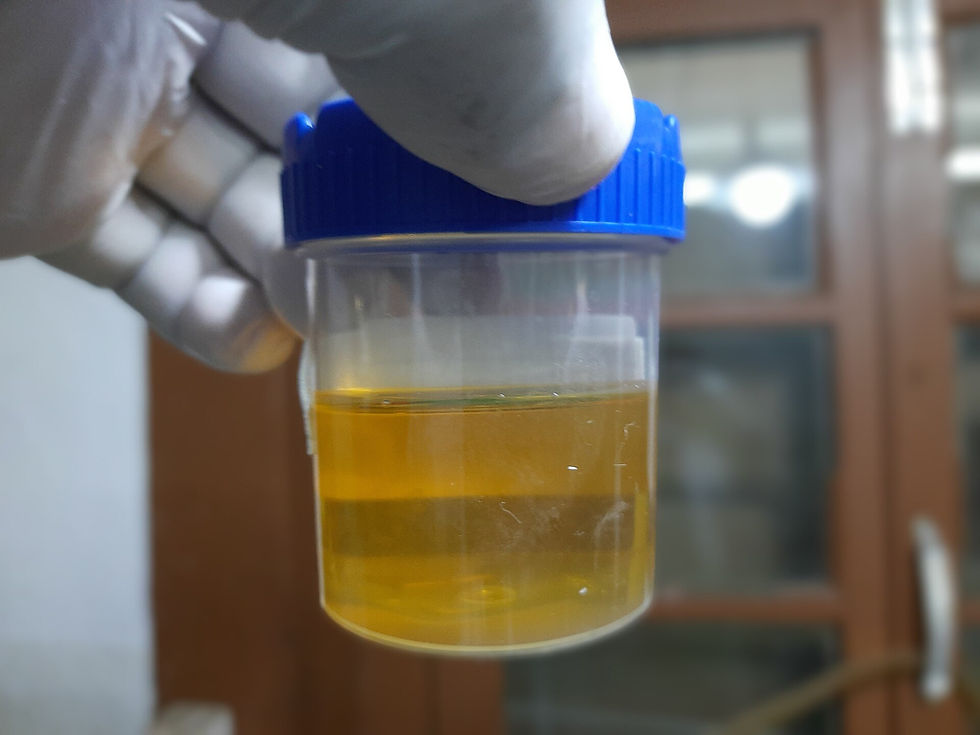
CANCER DIGEST – Oct. 4, 2026 – A simple urine test devised by researchers at Stanford Health Care and the Veterans Administration Palo Alto Health Care System can diagnose people with bladder cancer more accurately than current standard methods.
The test also allows physicians to not only assess the cancer’s response to treatment but to predict whether immunotherapy or chemotherapy is likely to be most effective for each patient. The study led by graduate student Kevin J. Liu, and senior authors Maximilian Diehn, MD, PhD, Joseph Liao, MD and Ash A. Alizadeh, MD, PhD, all at Stanford Health Care was published in the Oct. 2, 2026 Nature Medicine.
After surgery to remove a tumor, many patients are treated with a weakened strain of the bacterium used in tuberculosis vaccines called Bacillus Calmette-Guérin, or BCG. BCG is instilled directly into the bladder through a catheter once a week for six weeks and may be repeated as maintenance for up to three years. BCG stimulates the patient’s immune system to destroy any lingering cancer cells. But the treatment doesn’t work for everyone — some tumors simply lack the underlying immune activity needed to spark an effective attack — and there’s been no reliable way to tell in advance who will benefit.
The new test is unique in that it measures RNA messages shed by tumor cells into urine, rather than hunting for cancer-related mutations in DNA as most blood and urine liquid biopsies do. Because RNA reflects which genes a cancer cell is actively using, it captures a tumor’s behavior in addition to its presence.
“Measuring tumor DNA in urine can tell us whether a cancer is present,” said senior author Maximilian Diehn, MD, PhD, a professor of radiation oncology at Stanford Health Care. “Analyzing RNA can tell us not only whether a cancer is present — but also what it’s doing.”
In a study of 683 urine samples from patients and healthy volunteers, the test correctly identified 95% of people with localized bladder cancer and correctly identified no cancer in 90% of those who did not have bladder cancer, outperforming both standard urine cytology (in which urine is examined through a microscope to identify cancerous cells) and a DNA-based urine test. It also identified residual disease left behind after surgery and BCG immunotherapy.
The researchers also found that patients who subsequently responded to BCG had pre-treatment urine RNA messages rich in genes involved in T-cell and immune-signaling activity; those who didn’t instead showed signs of rapidly dividing tumor cells.
Leveraging this finding, they developed a biomarker that predicted with high accuracy whether tumors were more likely to respond to immunotherapy versus chemotherapy, which is currently a second-line treatment if BCG is not successful or is unavailable.
The researchers hope that this new biomarker for bladder cancer will be useful in guiding clinicians’ treatment choices for their patients, thereby improving outcomes.
“There are currently no biomarkers at all that are recommended or approved for surveillance” co-author Joseph Liao, MD said. "These treatments are incredibly taxing — physically and financially. If we can guide those choices, we have the potential to help both patients and clinicians.”
Sources: Stanford Health Care press release (edited for length) and Oct. 2, 2026 Nature Medicine


Comments